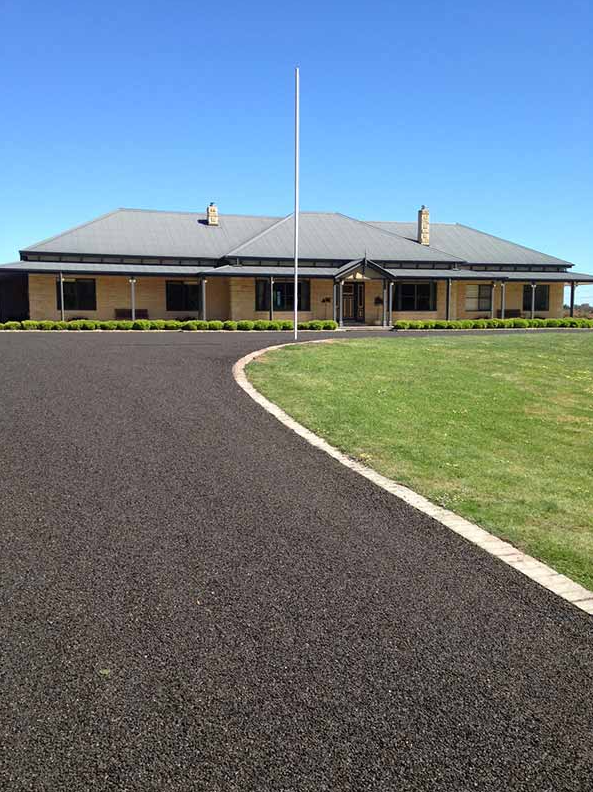
Large parking areas need to do more than provide somewhere for vehicles to stop. They must accommodate regular vehicle movements, turning, braking and repeated loading while providing a practical surface for drivers and pedestrians. The pavement also needs to manage rainfall effectively and remain maintainable as individual areas begin to wear.
For commercial and industrial properties in Bendigo, VIC, asphalt can be a highly practical surfacing option for large parking areas when the pavement is properly designed, prepared and installed. Its smooth finish, load-bearing performance and suitability for large-scale surfacing make it well suited to areas that experience frequent vehicle use.
However, the performance of an asphalt parking area depends on more than the asphalt itself. Ground preparation, pavement base construction, compaction, drainage and the expected traffic all contribute to how successfully the finished surface performs.
Why Is Asphalt Well Suited to Large Parking Areas?
Asphalt creates a continuous, relatively smooth pavement that can accommodate everything from parking bays and vehicle aisles to entrances, turning areas and access routes.
For larger sites, this provides the opportunity to create a consistent trafficable surface across a substantial area.
Some of the main advantages include:
- A smooth and practical driving surface
- Suitability for large areas
- Good performance under regular vehicle traffic
- A clean and uniform appearance
- Straightforward integration of parking layouts
- Practical maintenance and repair options
- Effective surface drainage when correctly graded
- Suitability for resurfacing when the pavement eventually becomes worn
These benefits depend heavily on appropriate pavement construction.
1. Asphalt Provides a Smooth Driving Surface
One of the most noticeable advantages of asphalt is the consistent surface it can provide.
Large parking areas contain numerous vehicle movements throughout the day. Drivers may be entering, parking, reversing, turning and travelling between different sections of the site.
A properly laid and compacted asphalt surface provides a relatively smooth transition across these movements.
This can be particularly useful in frequently travelled sections such as:
- Entrances and exits
- Main traffic aisles
- Turning areas
- Parking bays
- Loading access routes
- Connections between different sections of the property
A consistent pavement profile can make vehicle movements easier while reducing the unevenness associated with deteriorated or poorly prepared surfaces.
2. Asphalt Can Accommodate Regular Traffic
Large parking areas may receive hundreds or even thousands of individual vehicle movements over time.
The pavement therefore needs to withstand repeated loading rather than simply support stationary vehicles.
Asphalt is a flexible pavement material. When supported by a properly constructed base, it can distribute vehicle loads through the pavement structure while accommodating a degree of normal movement.
The important point is that asphalt cannot provide this performance independently.
Its ability to carry traffic depends on factors such as:
- Pavement thickness
- Base strength
- Compaction
- Ground conditions
- Drainage
- Vehicle type
- Traffic frequency
A parking area predominantly used by passenger vehicles may have different pavement requirements from an area regularly accessed by heavier commercial vehicles.
Professional pavement planning should therefore consider how the site will actually be used.
3. It Creates a Consistent Surface Across Large Areas
Large parking facilities can cover substantial sections of a property.
Using asphalt allows these spaces to be surfaced with a consistent material rather than having numerous changes in surface type across the main trafficable area.
This can create a more organised appearance and make different sections of the parking area feel connected.
A consistent surface also makes it easier to identify future deterioration. Cracks, depressions, potholes or worn sections can be noticed against the surrounding pavement and assessed before they become more extensive.
4. Asphalt Works Well With Defined Parking Layouts
An effective parking area needs clear organisation.
Vehicle aisles, parking bays, entrances, pedestrian routes and turning spaces should work together so vehicles can move through the property efficiently.
A smooth asphalt surface provides a suitable foundation for a clearly defined parking layout.
The pavement itself does not determine whether the parking area functions well; that comes from appropriate site planning. However, a consistent surface can support an organised layout and make the completed area easier to use.
This is particularly important on larger sites where vehicle movements need to remain predictable.
5. Asphalt Can Be Designed Around Different Traffic Loads
Not every section of a large parking area experiences identical stresses.
Some bays may primarily accommodate stationary passenger vehicles, while entrances and main aisles experience repeated movement throughout the day.
Turning areas can experience additional forces as tyres change direction. Loading or service areas may also need to accommodate heavier vehicles.
A professionally planned asphalt pavement can take these variations into account.
Instead of treating every square metre as though it performs the same function, pavement construction can be considered alongside expected traffic conditions.
This helps create a parking area that is appropriate for how the property operates.
6. Properly Graded Asphalt Can Support Effective Drainage
Drainage is particularly important across large paved areas because rainfall needs somewhere to go.
A flat-looking parking area still requires carefully planned surface levels. Appropriate falls help move water away from trafficable sections rather than allowing it to remain in depressions.
Standing water can become more than an inconvenience.
If water repeatedly collects around cracks or damaged sections, it may eventually penetrate into vulnerable pavement layers. This can contribute to weakening, movement and further deterioration under traffic.
Proper grading during construction can help direct rainfall across the pavement as intended.
Drainage should therefore be considered as part of the pavement design rather than after asphalt has already been installed.
7. Asphalt Can Be Repaired in Localised Areas
Large parking areas do not always deteriorate evenly.
Entrances, wheel paths, turning areas and heavily used sections may wear faster than quieter parts of the pavement.
One advantage of asphalt is that localised defects can often be repaired without automatically replacing the complete parking area.
Depending on the condition and cause of the damage, repairs may address:
- Potholes
- Failed patches
- Localised cracking
- Damaged edges
- Small areas of pavement failure
- Sections affected by settlement
The cause of the defect should still be investigated. Repeatedly repairing a pothole caused by an unstable base, for example, may not provide a lasting solution unless the underlying weakness is also addressed.
8. Asphalt Can Be Resurfaced as It Ages
A major consideration with any large pavement is what happens after years of service.
An asphalt surface will gradually experience wear from traffic and environmental exposure. This does not necessarily mean the entire pavement structure needs to be removed once the surface becomes aged.
Where the supporting pavement remains structurally suitable, asphalt resurfacing may be an option.
Resurfacing renews the wearing surface while retaining suitable existing pavement underneath.
Before resurfacing, however, the site should be inspected for:
- Structural cracking
- Rutting
- Settlement
- Potholes
- Failed patches
- Drainage problems
- Base instability
Unsuitable areas should be repaired before the renewed asphalt layer is installed.
This ability to rehabilitate an existing pavement can be particularly valuable for large parking areas where substantial portions of the underlying structure may remain serviceable.
9. Asphalt Provides a Professional Finish
The condition of a parking area can influence the overall presentation of a commercial or industrial property.
A surface containing widespread potholes, irregular patches, loose material and significant cracking can make an otherwise maintained site appear neglected.
A properly constructed asphalt surface provides a cleaner and more uniform finish.
While appearance should never take priority over structural performance, the two can work together. A pavement that has been properly prepared, graded and compacted can provide both practical performance and a more organised appearance.
10. Asphalt Maintenance Can Be Planned Around Pavement Condition
Large parking areas benefit from planned maintenance rather than waiting for widespread failure.
Asphalt makes it possible to monitor the pavement and respond to different levels of deterioration appropriately.
For example, maintenance may progress from:
- Monitoring minor surface changes.
- Treating suitable cracks and local defects.
- Repairing isolated potholes or failed sections.
- Correcting drainage-related problems.
- Repairing larger deteriorated areas.
- Resurfacing when surface wear becomes widespread but the underlying pavement remains suitable.
This approach allows maintenance decisions to be based on pavement condition rather than simply its age.
Ground Preparation Is Essential
Even high-quality asphalt will struggle to perform properly if installed over an unsuitable foundation.
Before a large parking area is surfaced, the ground and supporting pavement need to be prepared for the loads they will carry.
This may involve excavation, grading, placement of suitable pavement materials and thorough compaction.
The objective is to create a stable foundation capable of distributing traffic loads.
If preparation is inconsistent, different sections of the parking area can begin behaving differently. Weak areas may settle, rut or crack while neighbouring sections remain relatively sound.
Good asphalt performance therefore begins below the visible surface.
Compaction Has a Major Influence on Performance
Compaction is important throughout pavement construction.
Supporting materials need sufficient density and stability, while the asphalt itself must also be appropriately compacted during installation.
Inadequate compaction can leave pavement materials more vulnerable to further movement under traffic.
Over time, this may contribute to:
- Settlement
- Depressions
- Wheel rutting
- Cracking
- Uneven pavement levels
Professional installation focuses on creating consistent support across the parking area rather than simply achieving a smooth appearance on completion.
Heavy-Vehicle Areas Require Particular Attention
If trucks, service vehicles or other heavier vehicles regularly use the parking area, their routes should be considered during pavement planning.
Heavy loads place greater demands on the pavement structure. Turning, braking and slow manoeuvring can create particularly concentrated stresses.
Areas regularly exposed to these movements may require additional consideration during design and construction.
Ignoring actual vehicle use can result in specific sections deteriorating much sooner than the rest of the parking area.
Why Early Repairs Matter
Small pavement defects can become larger if they are ignored.
A crack can allow water into the pavement. A depression can begin holding rainfall. A damaged edge can continue breaking away as vehicles travel close to it.
Eventually, these relatively small problems can develop into potholes or more extensive pavement failures.
Regular inspection helps identify changes such as:
- New cracking
- Loose aggregate
- Depressions
- Standing water
- Edge damage
- Rutting
- Early pothole formation
Addressing deterioration while it remains localised can help protect the surrounding pavement.
When Might a Parking Area Need Resurfacing?
Asphalt resurfacing may become appropriate when deterioration has spread beyond a handful of isolated defects but the underlying pavement remains serviceable.
Possible signs include:
- Widespread surface wear
- Increasing cracking
- Numerous previous patches
- Rough or inconsistent pavement texture
- Multiple localised repairs
- Deterioration developing across several sections
Resurfacing should not simply conceal structural problems.
If the pavement has significant settlement, deep rutting or widespread base failure, those conditions need to be addressed before a suitable renewed surface can be established.
Why Professional Asphalt Installation Matters
Large parking areas place considerable demands on pavement construction because there are multiple traffic patterns, drainage requirements and load conditions to consider.
Professional asphalt installation should assess the complete site rather than focusing solely on the final surface.
Important considerations include:
- Existing ground conditions
- Pavement base construction
- Compaction
- Surface levels
- Drainage
- Traffic volumes
- Vehicle types
- Turning and loading areas
- Edge support
- Future maintenance requirements
Addressing these factors helps create a pavement suited to the practical demands of the property.
Conclusion
Asphalt offers several advantages for large parking areas, including a smooth and consistent driving surface, suitability for regular traffic, effective integration with drainage and parking layouts, practical localised repairs and the potential for future resurfacing.
However, the benefits of asphalt depend heavily on what is underneath it. Appropriate ground preparation, a stable pavement base, effective compaction, suitable drainage and construction designed around expected vehicle loads are all fundamental to long-term performance.
For property owners and businesses in Bendigo, VIC, Bendigo Road Tech provides professional asphalt surfacing, repairs and resurfacing for parking areas and other trafficable surfaces. If you are planning a new asphalt parking area or need to improve an existing surface, contact our team to discuss a solution based on the condition and intended use of your site.
Call us on: 03 5609 3573
Click here to find out more about Bendigo Road Tech
Click here to complete our contact form and see how we can help with your driveway needs.